
Traditional Balinese Village Experience
A true Bali village experience isn’t something you watch from the comfort of a car window. It’s something you step into, slowly, openly, and with respect. Kaura’s Manggis village walk will ease you into the daily rhythms of East Bali, introduce you to the community behind Kaura, and help you understand why life here has always been shaped by land, water, and cooperation.
Your Local Guide to a Bali Traditional Village
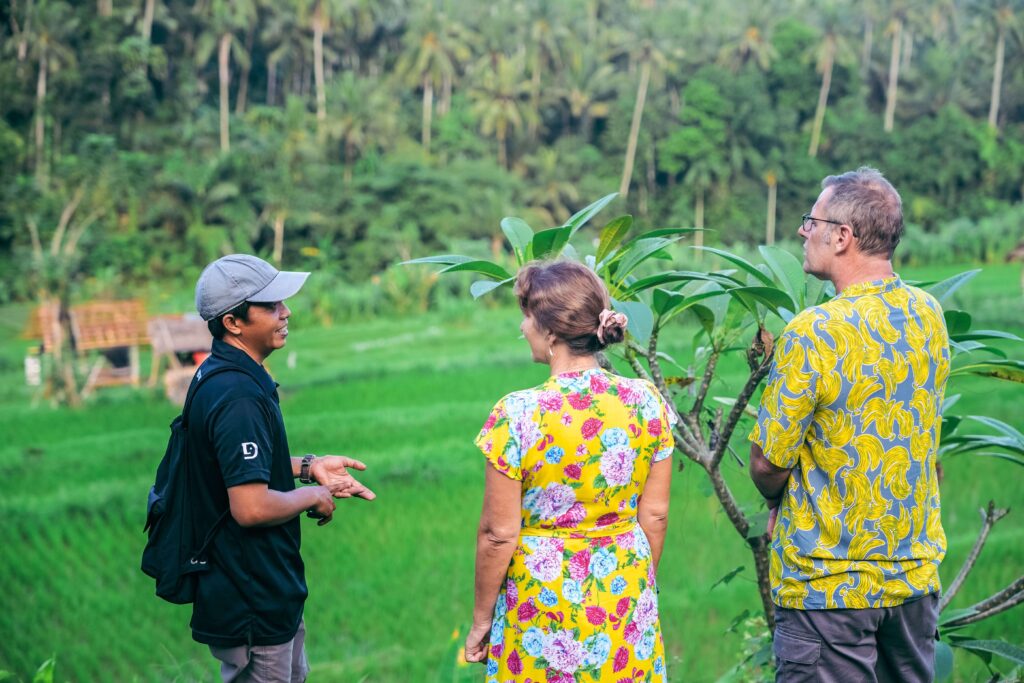
Your guide isn’t simply leading the route, they’re part of it. Often a farmer or community host, they’ll share stories as naturally as they share the path, greeting neighbours by name and explaining what’s happening in the fields in real time. This is what makes the walk feel genuine; you’re being welcomed into the village. You’ll meet people as people, artisans, farmers, shop owners, families, and feel the warmth of Manggis in the small, everyday exchanges that make a community.
A Village Walk That Reveals How Bali Really Works
This walk offers a layered view of life beyond the tourist trail. Your route passes through three communities, revealing how livelihoods are woven together; farming practices, small businesses, family compounds, and daily rituals that carry on with quiet consistency. You’ll learn what people grow, how they trade, and how time honoured traditions remain a practical way of living.
Walking Through Manggis, East Bali
Manggis sits in a landscape that feels richly alive, terraced paddies, jungle edges, village lanes, and open views that shift with every turn. The walk moves alongside rice fields and through places travellers often miss: community spaces, working gardens, and pathways where the scent of earth after rain can be as memorable as the view. The setting matters because it explains the story. In Bali, place isn’t just scenery, it’s identity.
The Best Time for a Bali Village Walk
Morning is a favourite: cooler air, sunlight on the terraces, and village life already in motion. Afternoon walks have their own charm too, when the heat begins to ease and the hour turns golden. This is slow travel by design, with time to pause and let the village introduce itself properly.
Rice, Community, and the Power of Cooperation in Bali
Bali is a vast rice-growing society, and rice farming, by necessity, has always depended on cooperation. Water must be shared, timing must be aligned, and decisions must be made collectively, because one field’s success is tied to the health of the whole system. Your guide will explain how this communal way of life extends far beyond farming: it shapes how communities organise, how neighbours support one another, and how village traditions stay strong across generations.
The Subak System and Kaura’s Organic Farming Story
During the walk, your guide will introduce the Subak, Bali’s ancient, community-managed irrigation system, internationally recognised (including UNESCO) for its cultural and ecological significance. You’ll see how water moves through the landscape in Manggis and how farmers cooperate to keep the paddies healthy. This is also where Kaura’s origin story comes to life; the irrigation of these very fields, and the village-led shift towards organic farming methods; and you’ll come to understand what chemicals can do to soil and waterways over time.
Start your stay with a village walk, and let Manggis introduce itself, slowly and beautifully.
